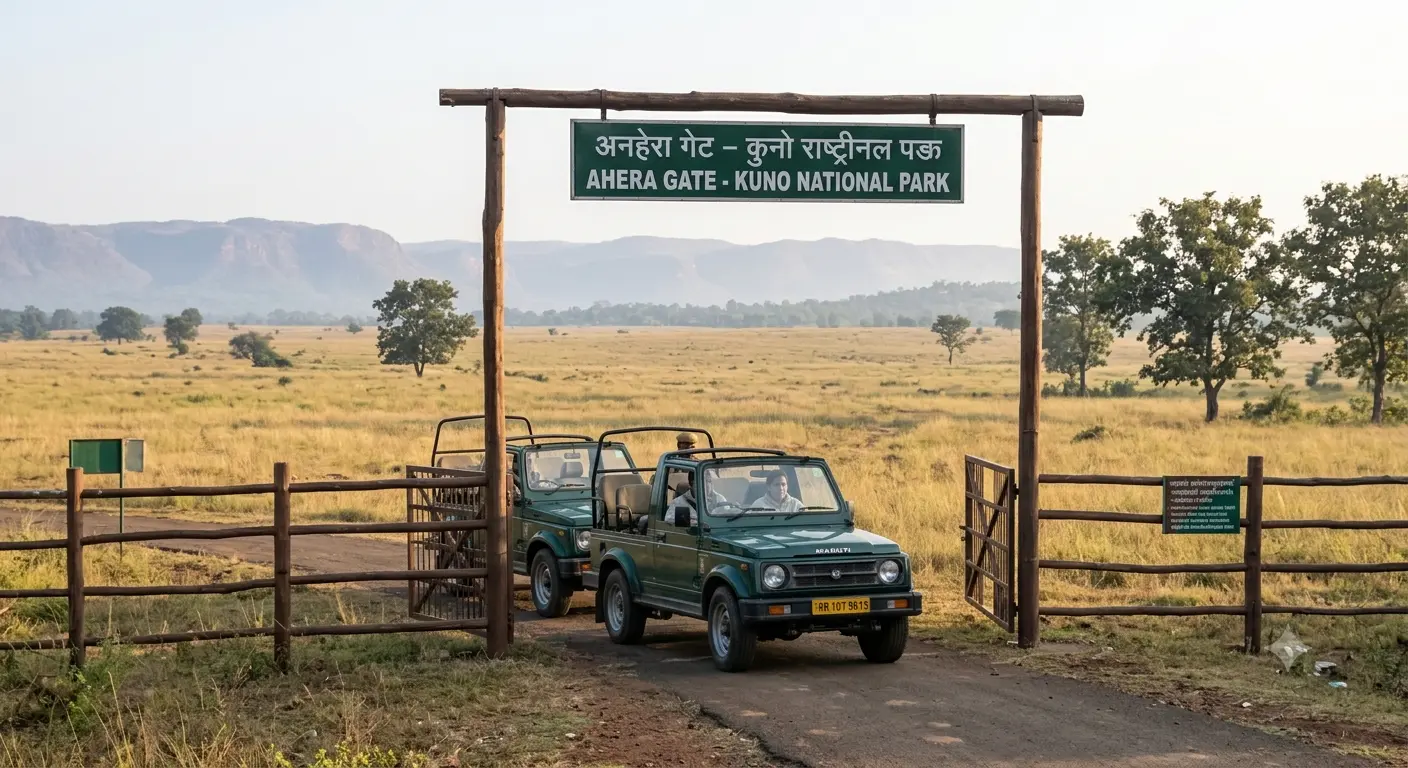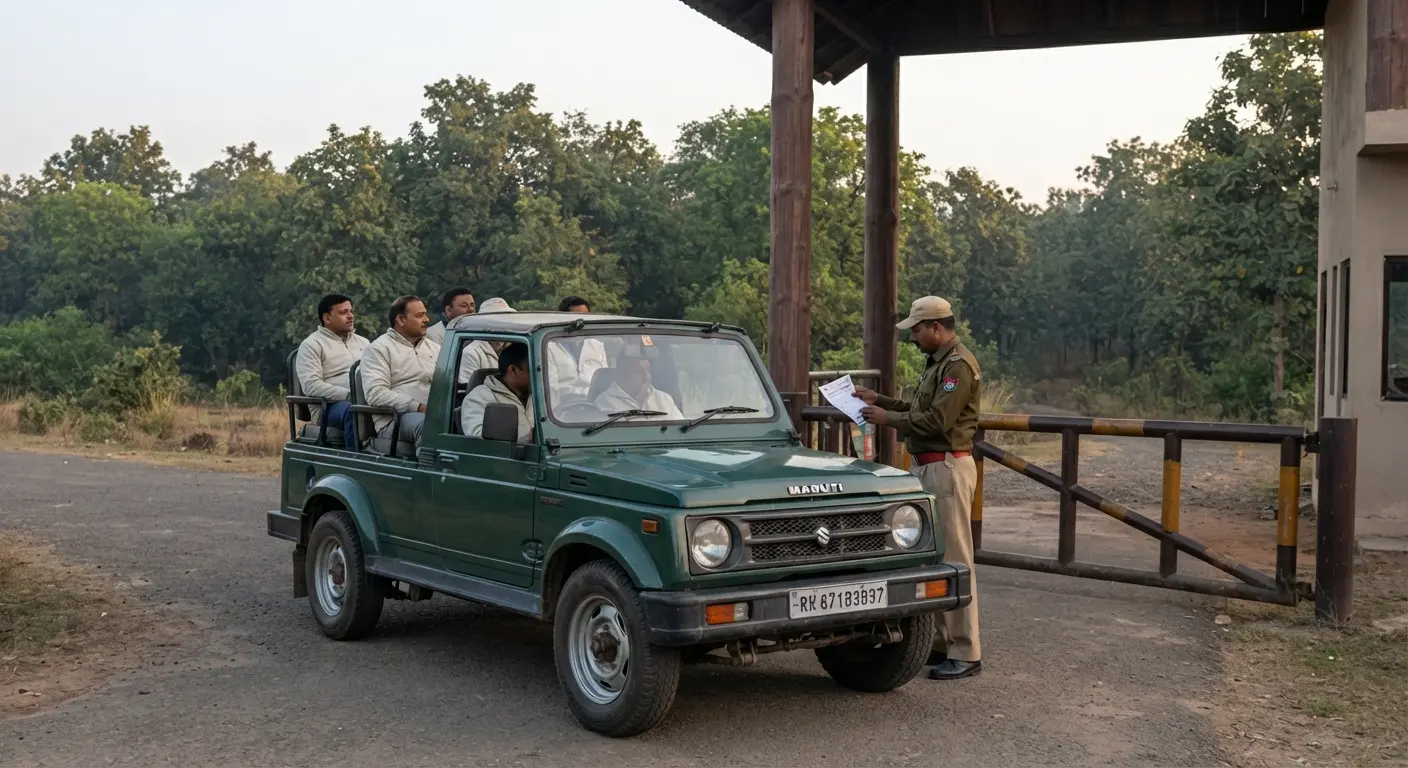
Kuno National Park Overview & History
Overview of Kuno National Park
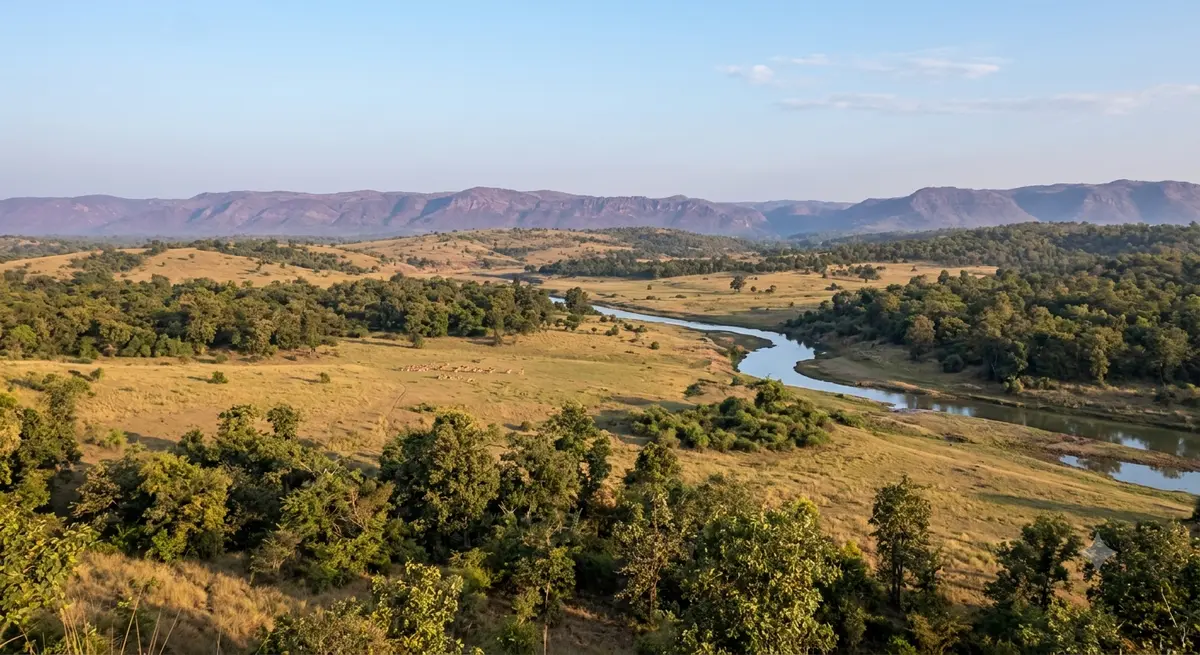
Kuno National Park is one of India's most remarkable wildlife destinations, located in the Sheopur district of Madhya Pradesh, approximately 165 km from Gwalior. Named after the perennial Kuno River that flows through its heart, the park covers a core area of 748.76 square kilometres and forms part of the larger Kuno Wildlife Division. Originally designated as Kuno Wildlife Sanctuary in 1981, it was upgraded to National Park status in December 2018, making it one of Central India's most significant protected landscapes.
Situated in the Vindhyan Hills, Kuno is a unique blend of tropical dry deciduous forests, open grasslands, riverine habitats and rugged hills. The landscape is dominated by Kardhai, Khair and Salai forests, interspersed with expansive meadows that provide excellent habitat for a wide variety of wildlife. Unlike many other protected areas in India, Kuno offers a rare combination of dense woodland and open savannah-like grasslands, creating ideal conditions for both predators and herbivores.
The park supports an extraordinary diversity of wildlife. Visitors may encounter leopards, sloth bears, striped hyenas, Indian wolves, dholes, jackals and the world-famous African cheetahs. Large populations of chital, sambar, nilgai, chinkara, blackbuck and four-horned antelope provide a healthy prey base, while more than 200 bird species make Kuno an excellent destination for birdwatchers and wildlife photographers alike. Ancient forts such as the historic Palpur Fort, along with the scenic Kuno River, add a fascinating cultural dimension to the wilderness experience.
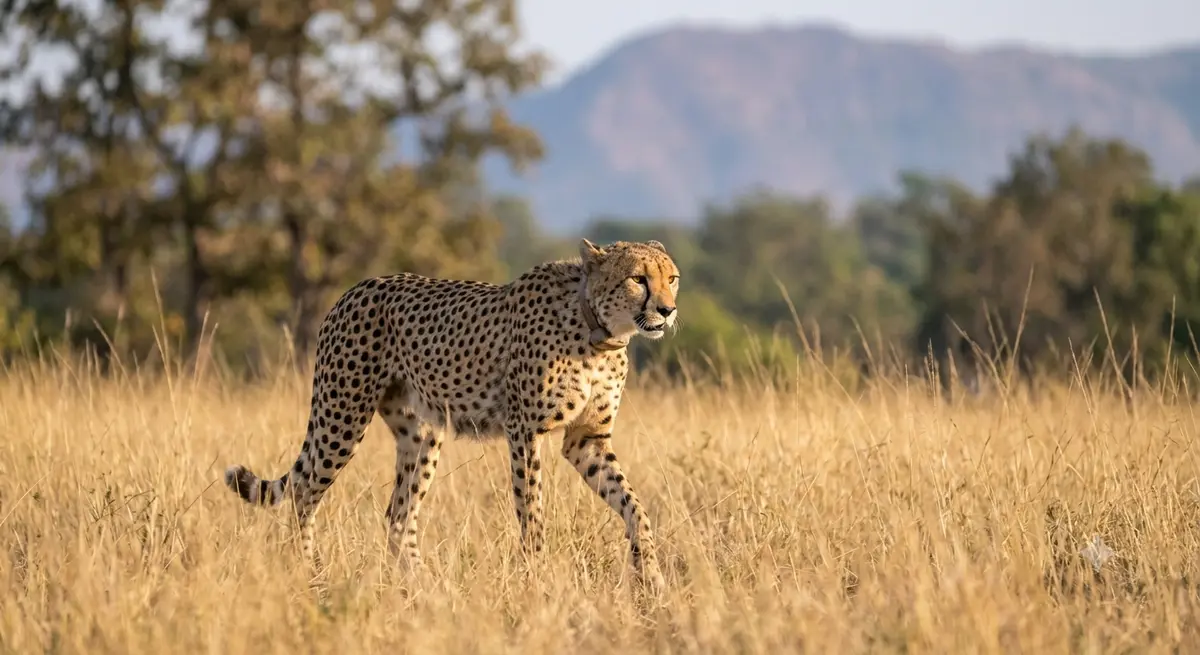
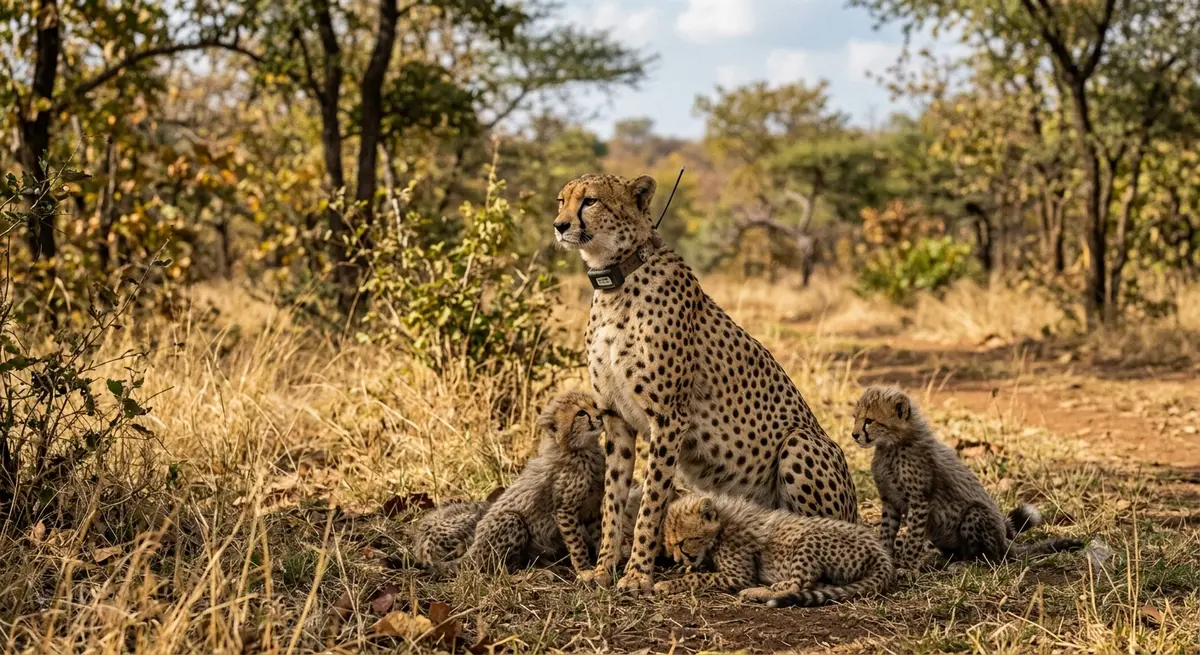
Today, Kuno National Park is internationally recognised as the home of Project Cheetah, India's ambitious programme to restore the cheetah after its extinction in the country over seven decades ago. Since the arrival of the first African cheetahs from Namibia in September 2022, followed by additional cheetahs from South Africa, the park has become a global symbol of wildlife restoration. In March 2023, female cheetah Jwala (Siyaya) gave birth to India's first cheetah cubs in over 70 years. The conservation milestone became even more significant in 2026 when KGP-2, an India-born female cheetah, gave birth to cubs in the wild—the first successful wild birth by a second-generation cheetah in India. These achievements have firmly established Kuno National Park as one of the world's most closely watched conservation landscapes.
History of Kuno National Park
The forests of Kuno have been associated with wildlife conservation for centuries. Historical records from the former Gwalior State describe the region as a dense wilderness that once supported elephants, lions and a rich variety of native wildlife. During the early twentieth century, even Lord Curzon and Maharaja Madhavrao Scindia explored the possibility of reintroducing lions into this landscape, highlighting Kuno's long-standing ecological importance.
Recognising the exceptional biodiversity of the region, the Government of Madhya Pradesh declared Kuno Wildlife Sanctuary in 1981 with an initial protected area of approximately 345 square kilometres. In 2002, an additional buffer area was added, expanding the protected landscape to strengthen wildlife conservation and habitat management.
One of the most remarkable chapters in Kuno's history was the voluntary relocation of 24 villages between 1998 and 2003. More than 1,500 families were resettled outside the protected area, allowing over 6,000 hectares of habitat to regenerate naturally. This pioneering conservation effort transformed Kuno into one of India's best-prepared landscapes for the reintroduction of large carnivores and is widely regarded as one of the country's most successful habitat restoration programmes.

For many years, Kuno was identified by the Wildlife Institute of India as the most suitable location for establishing a second free-ranging population of Asiatic lions outside Gujarat. Although the lion translocation never materialised, the extensive habitat restoration, prey-base improvement and scientific management carried out for the project ultimately laid the foundation for another historic conservation initiative. For many years, Kuno was identified by the Wildlife Institute of India as the most suitable location for establishing a second free-ranging population of Asiatic lions outside Gujarat. Although the lion translocation never materialised, the extensive habitat restoration, prey-base improvement and scientific management carried out for the project ultimately laid the foundation for another historic conservation initiative.